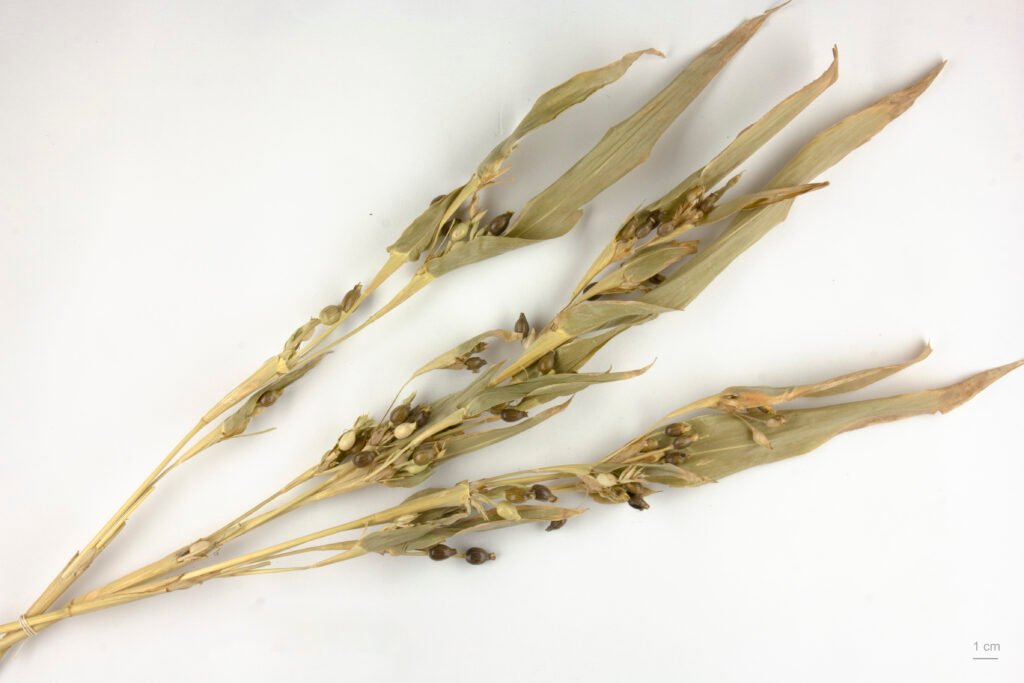
What is Job’s Tears?
Job’s tears, also called coix seed or yiyiren, is the dried ripe kernel of Coix lacryma-jobi var. ma-yuen. Listed in the 2024 NHC catalog of 106 medicinal-and-edible plants, it is a staple of damp-removing and skin-clearing formulas in traditional Chinese medicine, and a popular beauty grain in modern Chinese cooking.
How to Use
Congee
30-60g of coix simmered with rice into the classic beauty breakfast porridge. Eat it once or twice a week for clearer skin and lighter body.
Roasted coix tea
Lightly roast coix in a dry pan until fragrant, then brew as tea. This roasted version (bei chao yi mi cha) is gentler on the stomach and a popular weight-management drink.
Red bean soup
Cook coix with red beans and rock sugar into the classic damp-removing dessert soup (yi mi hong dou tang). Add winter melon in summer for an extra cooling effect.
Face mask
Grind cooked coix into a paste, mix with honey, and apply as a face mask. Leave on for 15 minutes for a brightening, acne-clearing treatment.
Raw vs. Roasted
Raw coix is slightly cool and best for clearing heat. Roasted coix is warmer and gentler on the stomach, better for people with weak digestion or loose stools. Choose based on your constitution.
How to Choose
Pick plump, white, evenly-sized kernels with no musty smell. Top grades come from Yunnan, Guizhou, and Guangxi. Store in a sealed container in a cool, dry place; refrigeration extends shelf life.


Be the first to reflect
Join the conversation and share your experience with fellow seekers.
Free to join. Reflections earn qi, and your element shows beside your name.