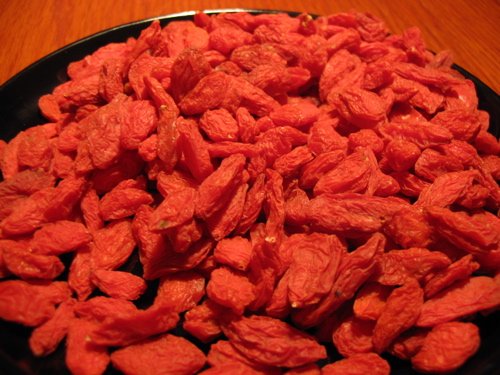
What is Goji Berry?
Goji berry, also called wolfberry, is the dried ripe fruit of Lycium barbarum (Ningxia goji) or Lycium chinense. Listed in the 2024 NHC catalog of 106 medicinal-and-edible plants, it is the most iconic Chinese superfood, used in tonics, teas, congees, and soups for over 2,000 years.
How to Use
Direct eating
10-15g of dried goji per day, chewed slowly as a daily snack. Easy, portable, and the most common way Chinese office workers take goji on the go.
Tea
Combine with chrysanthemum (gou qi ju hua cha) for the classic eye-care drink; with red dates (gou qi hong zao cha) for blood nourishment; or with both for an afternoon pick-me-up.
Congee and rice
Stir a handful into plain rice porridge, eight-treasure congee, or sweet rice paste. It also adds color and nutrition to eight-treasure rice (ba bao fan).
Tonic soups
Add to chicken, pork-rib, or black-chicken soup. The classic pairing is goji with angelica and red dates for a women’s monthly tonic.
How to Choose
Ningxia goji is the gold standard: bright red, large, with few seeds, and sweet without bitterness. To spot dye or sulfur fumigation, soak in water: real goji slowly releases a yellow pigment; chemically treated berries release a bright red dye. Store sealed in a cool, dry place, or refrigerate for six months or more.
Daily Limits
Aim for 20g per day or less. Excess can cause flushing, nosebleeds, and raised eye pressure, especially in people with internal heat.


Be the first to reflect
Join the conversation and share your experience with fellow seekers.
Free to join. Reflections earn qi, and your element shows beside your name.