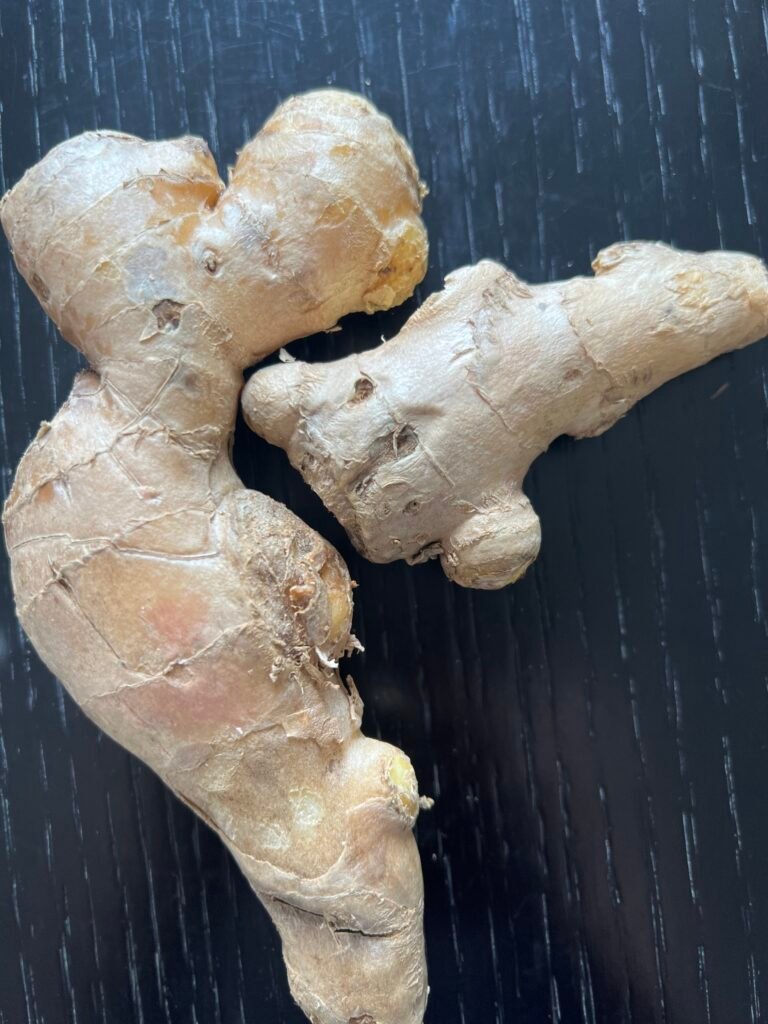
What is Fresh Ginger?
Fresh ginger is the fresh rhizome of Zingiber officinale. Both fresh (sheng jiang) and dried (gan jiang) forms are listed in the 2024 NHC catalog of 106 medicinal-and-edible plants. Ginger is one of the most universally used culinary and medicinal roots in the world.
How to Use
Ginger-brown-sugar tea
Three thin slices of fresh ginger plus a spoon of brown sugar in boiling water. This is the classic first-aid drink for early-stage wind-cold colds, especially in autumn and winter.
Cooking base
Add at the start of any stir-fry or braise. It pairs naturally with garlic, scallion, and chili to build the foundation of almost every Chinese savory dish.
Foot bath
Boil 100g of sliced ginger in 1L of water for 10 minutes, then add the liquid to a foot bath. In TCM, this draws cold out of the body through the feet.
Topical paste
A small dab of fresh ginger paste on the belly-button area is a traditional remedy for motion sickness and travel nausea.
How to Choose
Look for firm, plump rhizomes with smooth, unwrinkled skin. Old ginger (lao jiang) is more pungent and warming; young ginger (nen jiang) is milder and great for pickling. Wrap in paper towels and refrigerate for two to three weeks, or freeze whole for longer storage.
Old vs. Young
For warming and nausea relief, reach for old ginger. For a gentle, juicy flavor in stir-fries and pickles, young ginger is better.
Be the first to reflect
Join the conversation and share your experience with fellow seekers.
Free to join. Reflections earn qi, and your element shows beside your name.