Chrysanthemum (菊花, Ju Hua)

Chrysanthemum morifolium · ju hua (菊花)

Fire Element · 火

Chrysanthemum, the dried flower head of Chrysanthemum morifolium, is one of the most widely consumed medicinal-and-edible flowers in China.

Chrysanthemum (菊花)
Saved entries live on your free account.

Taste & Nature

Taste
  • Sour
  • Bitter
  • Sweet
  • Pungent
  • Salty
Nature
  • Hot
  • Warm
  • Neutral
  • Cool
Organ
Lung, Liver
Season
Autumn

In the Five Flavor system, bitter corresponds to the Fire element. Downward and clearing — bitter foods drain heat and excess, supporting clarity and calm.

Traditional Uses

In traditional Chinese practice:

  • Brewed as a cooling herbal tea (alone or with goji) for fever, sore throat, red eyes, and eye strain
  • Added to soups and stews during the last 10 minutes of cooking
  • Steeped in wine for the traditional Chongyang (Double Ninth) Festival
  • Combined with honeysuckle and other herbs in classic heat-clearing formulas

These statements describe traditional usage. They have not been evaluated by the FDA and are not intended to diagnose, treat, cure or prevent any disease.

What It Is

What is Chrysanthemum?

Chrysanthemum, the dried flower head of Chrysanthemum morifolium, is one of the most widely consumed medicinal-and-edible flowers in China. Listed in the 2024 NHC catalog of 106 medicinal-and-edible plants, it has been brewed into cooling herbal tea for over 2,000 years.

How to Use

Tea (most common)

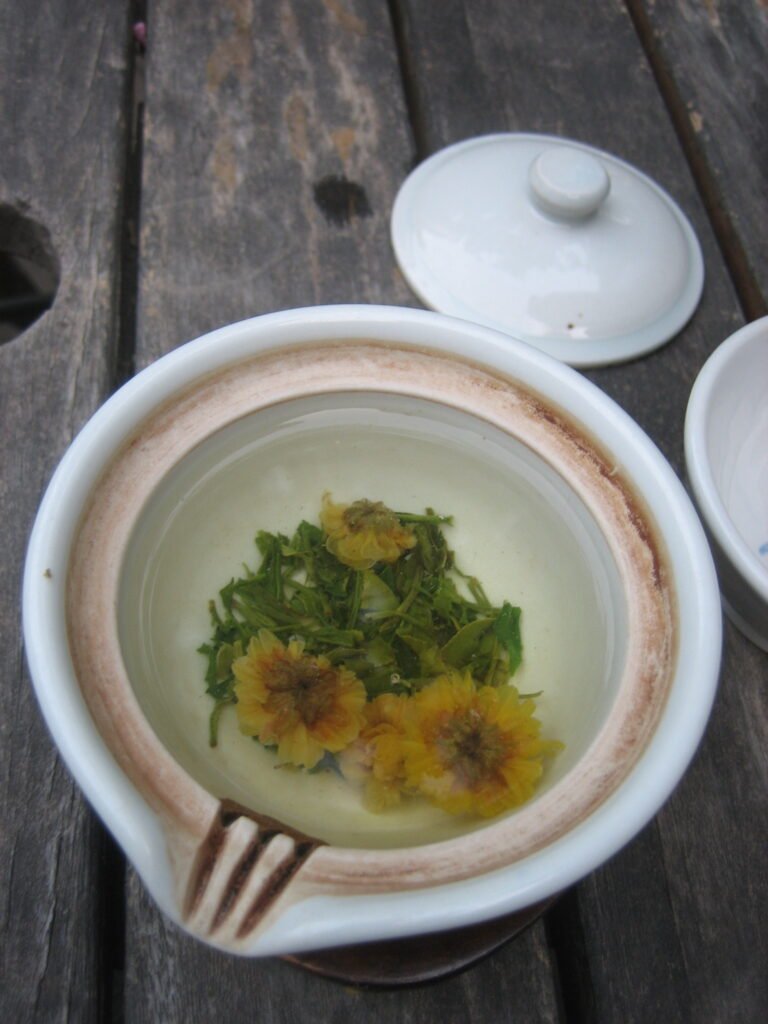
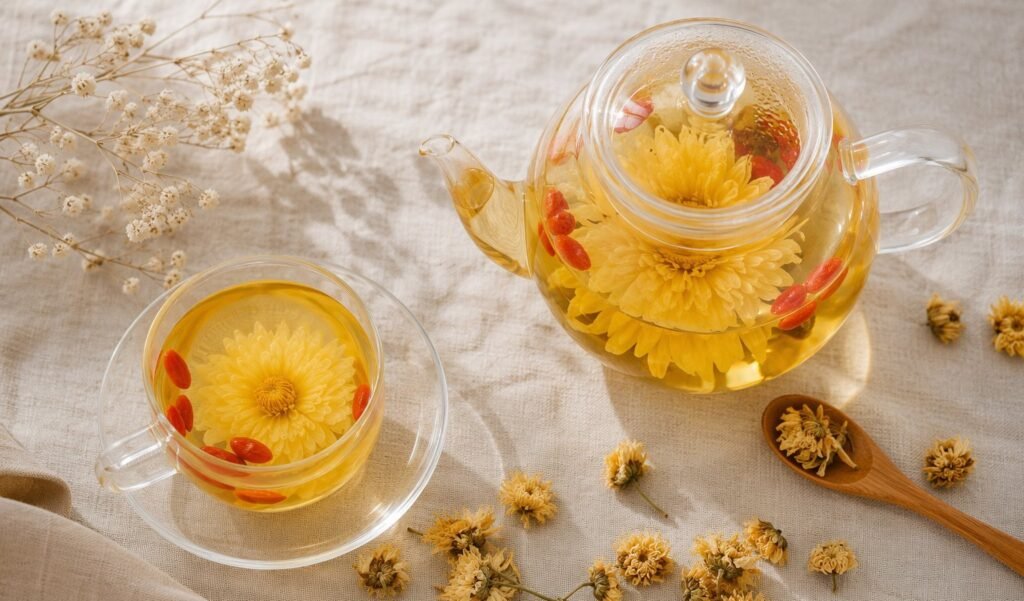
Steep 3-5 dried flowers per cup in 90°C water for 5 minutes. Combine with goji berries (gou qi ju hua cha) for the classic eye-care blend enjoyed in Chinese offices.

Soup and stew

Add whole flowers to pork-rib or chicken soup during the last 10 minutes of cooking to extract a light floral fragrance.

Chongyang wine

On the Double Ninth Festival, chrysanthemum is steeped in rice wine (ju hua jiu) and shared as a traditional toast to longevity.

What to Look For

Choose whole, pale-yellow flower heads with tight petals and a delicate aroma. The two top grades are Hangju (from Zhejiang) and Boju (from Anhui). Store in a sealed jar away from light and moisture; shelf life is about one year.

Pairing Tips

Chrysanthemum pairs naturally with goji, honeysuckle, and rock sugar. Avoid pairing with strong, oily, or fishy ingredients, which clash with its light floral character.
Cautions

Who should take care
  • Avoid in cases of qi deficiency with cold (qi xu wei han) or chronic diarrhea
  • Do not combine with pork — traditional texts warn against this combination
  • Pregnant women should consult a doctor before long-term medicinal use

Where to Find It

Widely cultivated in China; top grades are Hangju from Zhejiang and Boju from Anhui

Browse the full Herb Grimoire →

Be the first to reflect