

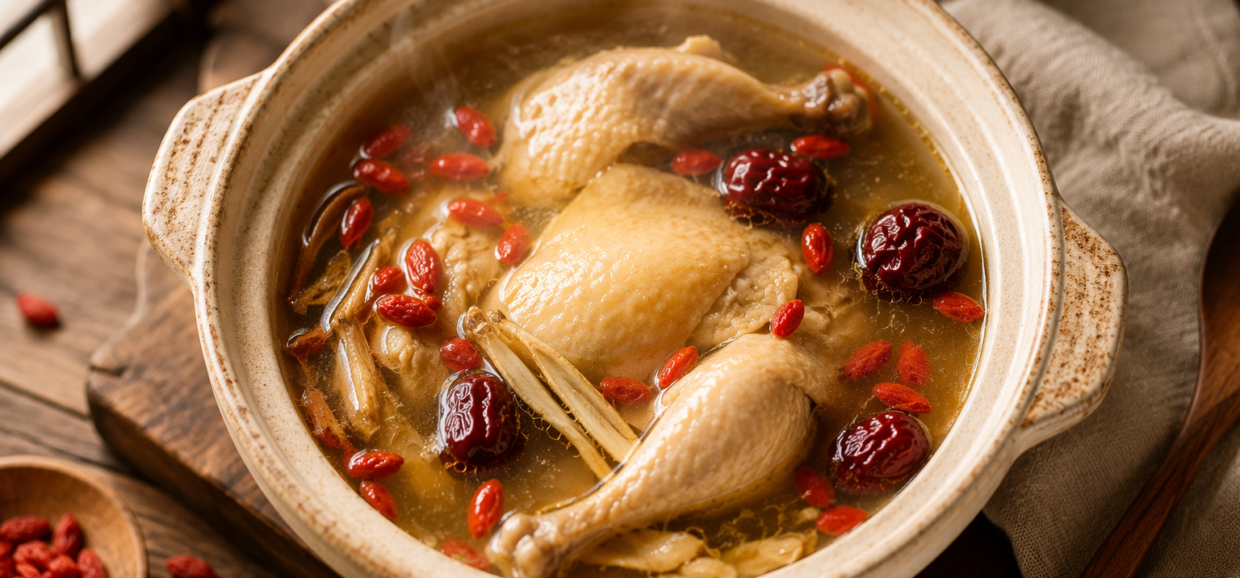
There is a pot of soup on the stove in a million Chinese homes every Sunday. This is that soup.
Goji and red date chicken soup is the classic Chinese home remedy for a tired week — not a medicine, but a ritual. Chicken simmers low and slow with ginger until the broth turns golden, then goji berries and red dates go in at the end so they stay plump and sweet. In the five-flavor tradition, this bowl is sweet and gently warming: the flavor of steady energy.
Why it works
In the traditional framework, red dates (jujubes) and goji berries are the two most beloved “everyday tonics” in the Chinese kitchen — sweet in flavor, traditionally used to nourish and steady. Ginger (pungent) keeps the soup from feeling heavy and is the classic companion to chicken in home cooking. Modern nutrition would simply call this a protein-rich, mineral-rich broth with fruit — which is also true.
Ingredients (serves 3–4)
- 1 whole chicken leg or 2 bone-in thighs (about 600 g / 1.3 lb), cut into large pieces
- 8–10 dried red dates (jujubes), rinsed
- 2 tablespoons dried goji berries
- 4 slices fresh ginger
- 1.5 liters (6½ cups) cold water
- 1 teaspoon salt, or to taste
- Optional: 2–3 slices of Chinese yam (huai shan) or a small handful of dried longan
Where to buy: red dates and goji berries are stocked at any Asian grocery store, and increasingly at Whole Foods and Trader Joe’s. Look for unsulfured, plump berries — they should be deep red, not bright orange.
Instructions
- Blanch the chicken. Cover the chicken pieces with cold water, bring to a boil, and cook 2 minutes. Drain and rinse — this keeps the final broth clear and golden.
- Simmer. Return the chicken to a clean pot with 1.5 L cold water and the ginger. Bring to a boil, then lower to the gentlest simmer. Cover and cook 60 minutes.
- Add the fruit. Add red dates and simmer 20 more minutes. Add goji berries for the final 10 minutes — any longer and they turn mushy.
- Season and serve. Salt lightly at the end. Serve the broth first, with the chicken and fruit in the bowl.
Notes from the tradition
- Traditionally served in autumn and winter, and to anyone recovering from a tiring stretch — new mothers, students in exam season, desk workers in deadline weeks.
- Leftovers keep 2 days refrigerated; reheat gently.
- If you are pregnant, nursing, or managing a medical condition, treat this as food (which it is) and check with your physician about any ingredients you’re unsure of.