

Ask a Chinese grandmother what to eat when your stomach is off, and the answer is always the same: zhou — congee.
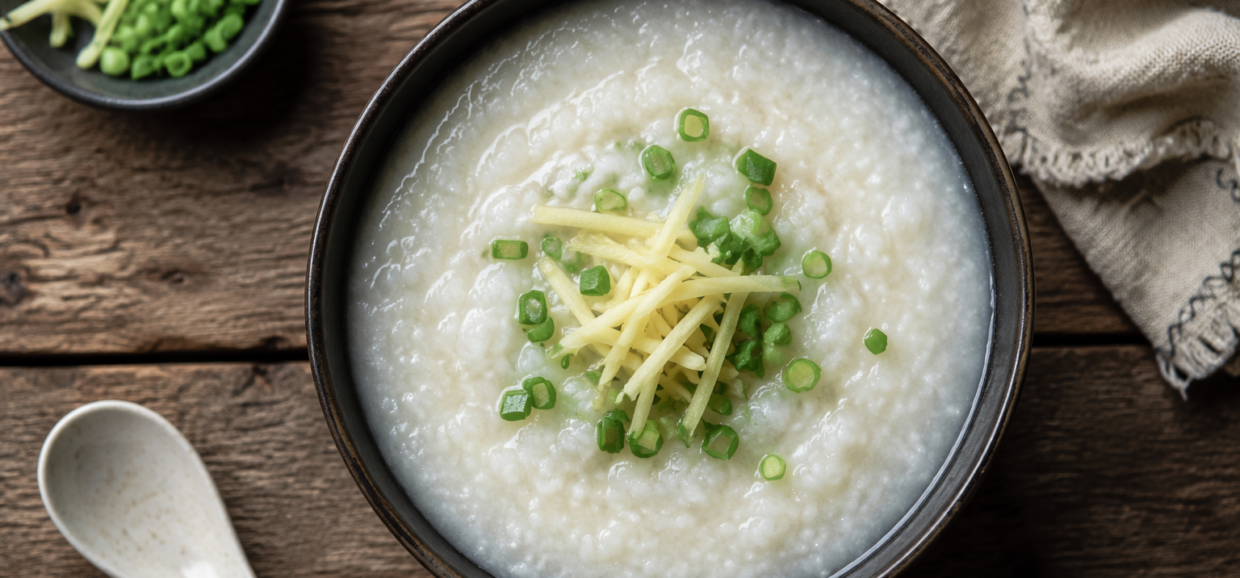
Congee is rice cooked slowly in plenty of water until it breaks down into silk. It’s the gentlest staple in the Chinese kitchen — breakfast, sick-day food, and late-night comfort all in one. This version uses ginger (pungent, warming) and scallion to make the simplest bowl taste like care itself.
Why it works
In the five-flavor tradition, plain rice congee is sweet and neutral — the ultimate centering food, easy on digestion by design. Ginger adds pungent warmth, the traditional answer to cold, damp days. It is also genuinely gentle: a soft, hydrating, low-fat meal that asks very little of your stomach.
Ingredients (serves 2–3)
- ½ cup (100 g) jasmine or short-grain white rice
- 1.2 liters (5 cups) water or light chicken stock
- 1 thumb of ginger (about 20 g), cut into fine shreds
- 2 scallions, thinly sliced, whites and greens separated
- ½ teaspoon salt
- A few drops of sesame oil and white pepper, to finish
Instructions
- Rinse the rice 2–3 times until the water runs mostly clear. (Optional but worth it: freeze the rinsed, drained rice for 30 minutes — it breaks down faster and turns silkier.)
- Simmer. Bring the water to a boil, add the rice, and return to a boil. Lower to a gentle simmer, half-cover, and cook 45–50 minutes, stirring every 10 minutes so nothing sticks. The congee is ready when the rice grains have burst and the liquid looks creamy.
- Season. Stir in the ginger shreds and scallion whites for the last 5 minutes. Add salt.
- Serve with scallion greens, a few drops of sesame oil, and a pinch of white pepper.
Notes from the tradition
- Congee is a canvas: shredded chicken, a century egg, sweet potato, or a handful of goji berries all have their place — start plain and learn what you like.
- Thick or thin is personal; add hot water any time to loosen.
- As with any food tradition, listen to your body first — and to your physician if you have specific dietary needs.