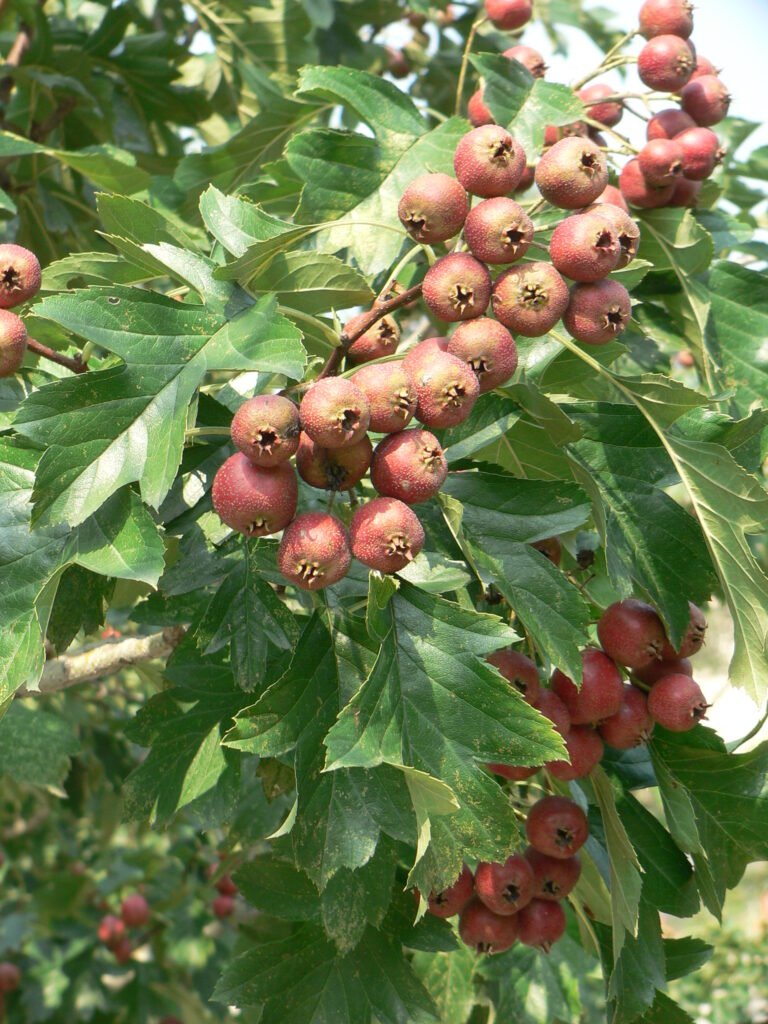
What is Hawthorn?
Hawthorn is the dried ripe fruit of Crataegus pinnatifida (Chinese hawthorn) or Crataegus cuneata. Listed in the 2024 NHC catalog of 106 medicinal-and-edible plants, it is the classic meat-digesting fruit, central to the famous candied hawthorn stick (tang hu lu) and the children’s digestive aid haw flakes (da shan zha wan).
How to Use
Digestive tea
10-15g of dried hawthorn slices steeped in boiling water for 10 minutes. Add brown sugar for a sweet version, or a few chrysanthemum flowers for a tea that’s also good for the eyes.
Haw flakes (da shan zha wan)
The classic over-the-counter children’s digestive aid sold in every Chinese pharmacy for generations. Sweet, slightly sour, and easy to eat.
Tang hu lu (hawthorn stick)
Fresh hawthorn fruits skewered and glazed in hot sugar. A beloved Beijing street snack, and a vivid childhood memory for many Chinese.
Pork-rib soup
Add dried hawthorn slices to pork-rib soup to help digest the fat and brighten the flavor.
Hawthorn wine
Soak dried hawthorn in rice wine for one month. A small glass at dinner is a folk remedy for cardiovascular support.
How to Choose
Northern Chinese hawthorn (bei fang shan zha) is larger, bright red, and quite sour; southern hawthorn (nan shan zha) is smaller and more aromatic. Both work medicinally. Store dried hawthorn in a sealed jar away from moisture; it keeps for up to two years.
When to Avoid
Skip hawthorn on an empty stomach, as its acidity can irritate the stomach lining. People with stomach ulcers or hyperacidity should use it cautiously.

Be the first to reflect
Join the conversation and share your experience with fellow seekers.
Free to join. Reflections earn qi, and your element shows beside your name.